A Chicago law firm signing a new lease, taking another floor in its tower or gutting the space it already holds can give ClearMax technicians the technology side as a single project. That means structured cabling to each office and conference room, WiFi with a visitor network held apart, card readers on the doors that matter, cameras at the entrances, conference room screens, and the server and computers that move into the new closet. The firm gets one scope, one schedule and one written record at the end. A monthly plan is offered afterward and never required.
Last updated: November 2026
- 1Mark up the drawings. Jacks, access points, readers, cameras and the closet go onto the architect's plan.
- 2Written quote. Built from that plan and the details the firm sends, with the permit route named.
- 3Two install passes. Cable while ceilings and walls are open; devices once finishes are in.
- 4Test, then hand over. Each jack, door and camera is checked and entered in the binder.
The trades this project pulls together
- Structured cabling and WiFi for offices, conference rooms, reception, the workroom and every copier or scanner station, with ceiling access points on their own runs.
- Door readers on the main entrance, the file room, the records storage room and the network closet.
- Cameras covering entrances, reception and corridors, recorded with sound off.
- Conference room screens with the power, data and video cabling roughed in behind the wall.
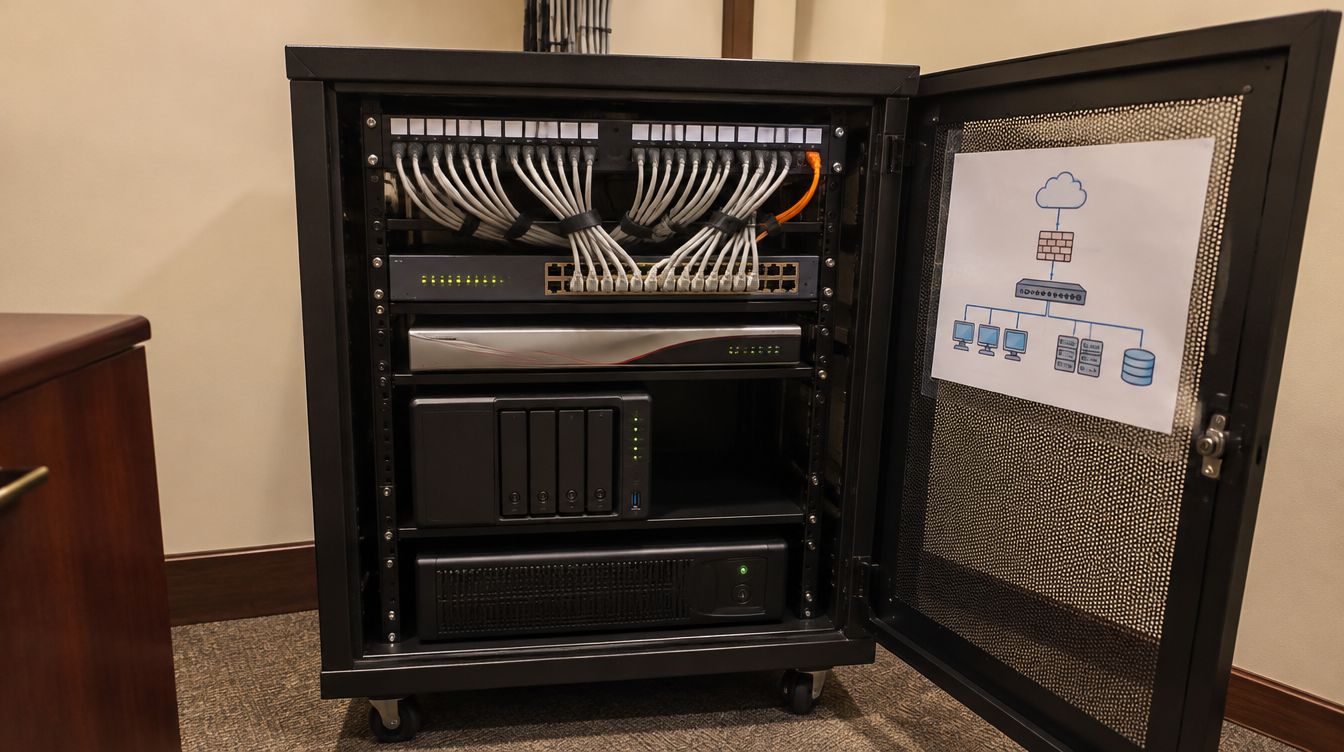
- The closet itself: rack, switches, firewall, battery backup, cooling and a reader on its door.
Conference rooms, reception and the file room
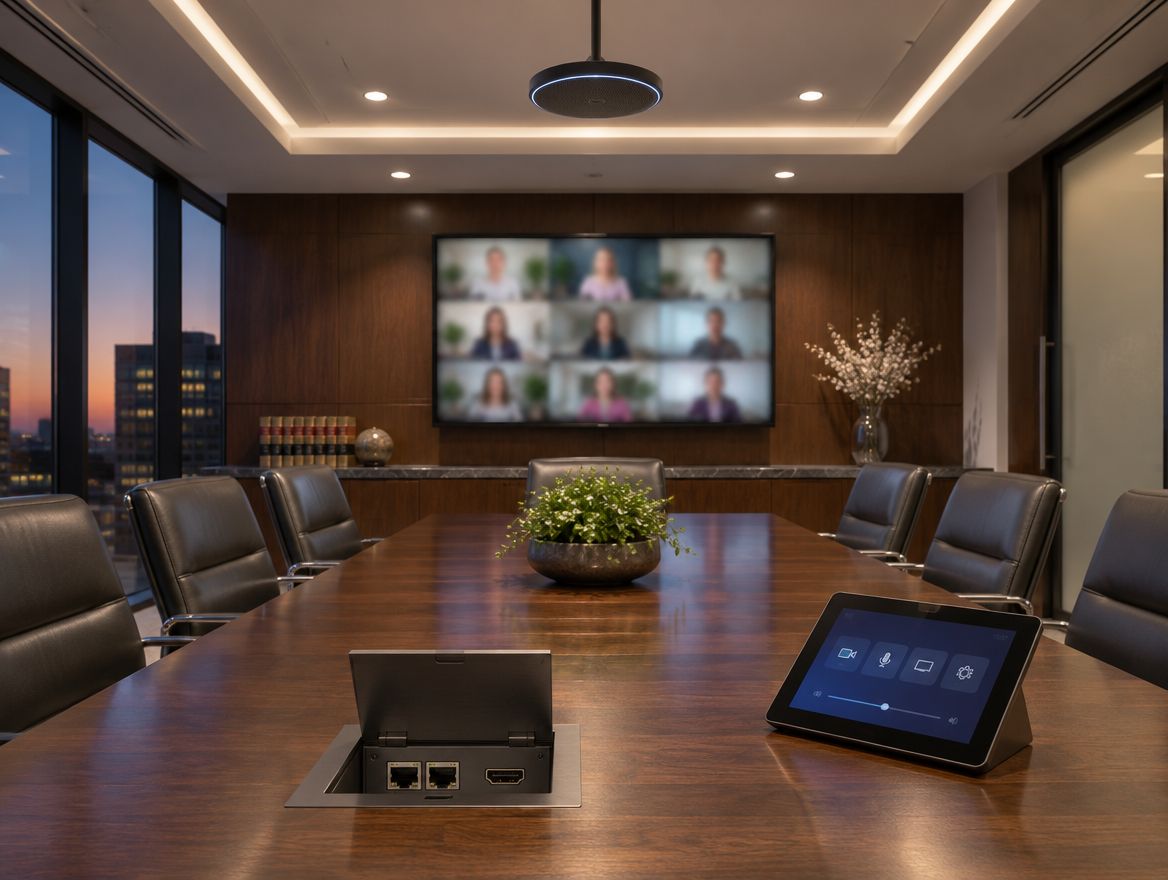
Conference rooms are where a law office is judged, and where most technology complaints start. Each one is planned around how it will be used: client meetings, video calls with opposing counsel or a court reporter, mediation sessions with several parties dialing in, or a trial team working through exhibits on a large screen. The table gets a floor or table box with data and power, the screen gets its own drop, and the room is tested with a real call before move-in.
Reception needs a check-in point, a printed card for the visitor WiFi, and a clear line of sight for staff without a camera looking into the waiting area chairs. The file room and records storage get a reader with door history, so the firm can see who opened them and when, and the copier and scanner stations nearby are wired to the firm network because they keep scanned pleadings and exhibits in memory.
The server, the computers and the move weekend
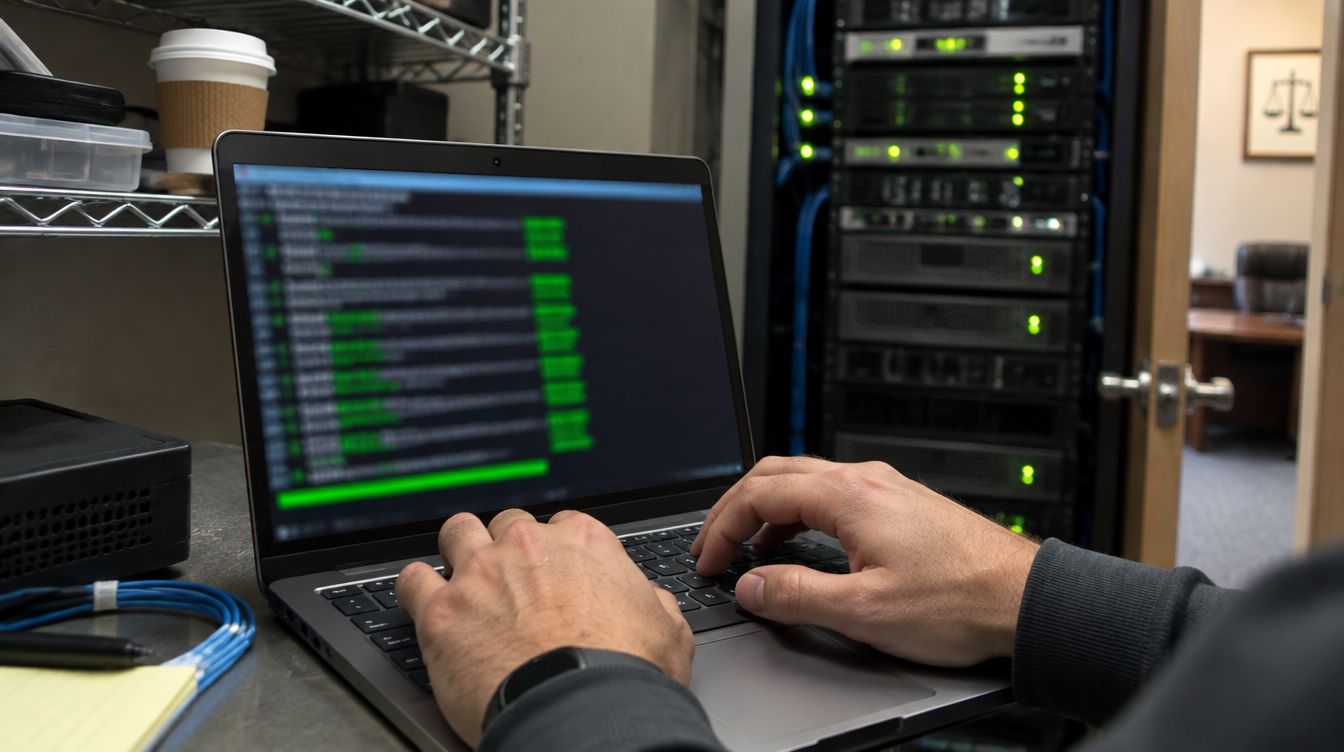
Computers and servers come last, once cable and power are proven. The firm decides early whether its documents stay on a server in the new closet or live with a hosted provider, and whether existing computers move or get replaced. A server that stays is built and tested in its new rack before anyone relies on it. The move itself is usually planned over a weekend, with desks, printers and phones checked from each seat before the first working morning. Licenses, domain names and accounts stay in the firm's own name throughout.
What the Illinois rules say, and what they leave to the firm
Illinois Rule of Professional Conduct 1.6(e) says a lawyer shall make reasonable efforts to prevent the inadvertent or unauthorized disclosure of, or unauthorized access to, information relating to the representation of a client. Comment [8] to Rule 1.1 adds that a lawyer should keep abreast of the benefits and risks associated with relevant technology. Neither rule names a cable, a camera or a lock, and nothing on this site is legal advice. A buildout simply settles, for the length of the lease, who can open each door, what a guest's laptop can reach, and what a hallway camera can see.
The Personal Information Protection Act, at 815 ILCS 530/45(a), also requires a data collector holding records with personal information about an Illinois resident to implement and maintain reasonable security measures for those records. Its subsection (c) adds that a collector which complies with another state or federal law requiring greater protection is deemed to comply with that section. The physical part of that work sits in the build: a locked closet, a visitor network that cannot see the firm's server, and door history on the rooms where records are kept.
Permits and building rules in Chicago
The City's Department of Buildings says that, except as it provides, a building permit is required for the installation of low voltage wiring, and the exception it lists for that wiring is written for residential buildings up to 4 stories. The scope names any City permit the job needs and puts it on the schedule. Building management sets the rest: approved work hours, freight elevator bookings, riser access between floors, and any change at a base-building door or lobby turnstile.
How a law office plan differs from a general office plan
- The file room, records storage and network closet each get their own reader and their own history, apart from the front door.
- Rooms used with clients get no camera and nothing that records sound.
- The visitor network is proven from a guest laptop to reach the internet and nothing else.
- Copiers and scanners sit on the firm network, never the visitor one, and their stored images are part of the handover notes.
- Retired drives leaving the old office are wiped or destroyed, and the date is written down.
Towers, lofts and suburban parks
Downtown towers bring building-run risers, loading dock rules and work that has to wait until tenants below have gone home. Converted loft buildings bring brick, heavy timber and ceilings with no space above them, so cable paths are chosen before the architect fixes the layout. Suburban office parks usually have more room overhead and less control from management. Each of those conditions is written into the scope at the start, so the schedule holds once the ceiling tiles come down.
Questions Chicago firms raise at the start
When should the technology plan begin?
While the space plan is still a draft. Moving a closet on paper costs nothing; moving it after drywall costs days.
Does the firm need a monthly contract?
No. A managed IT plan is available after move-in, and the buildout is quoted the same either way.
What goes into the written quote?
From the drawings and the details the firm provides. Anything found later that changes the work is raised in writing and the quote is updated before it is done.
Can the firm keep working during a move?
Yes. Cabling and devices go in before move-in, and the switch from the old office to the new one is planned for a weekend.